
|
Founder Ryan Lockard recently had the opportunity to speak about Specialty Athletic Training on the "Sports Will Save Us All" podcast. He spoke about his experience working with individuals with disabilities, the inspiration behind serving the disability community, and much more! Make sure to give it a listen by clicking HERE. 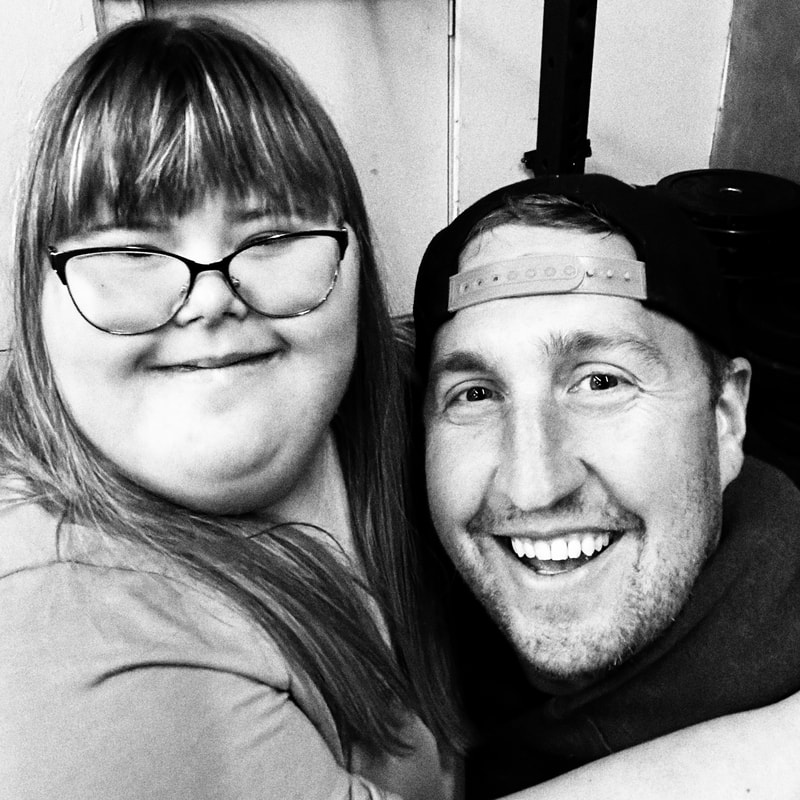
0 Comments
As seen in Spectrum Life Magazine Summer 2023 Edition Specialty Athletic Training was founded in June 2012 to provide access to professional fitness services to the disability community. Our programming is relationship-driven with the purpose of creating a fun and inclusive environment where everyone feels safe and welcomed. Lewis & Clark College is home to our Portland, Oregon location and is where we first began building our Specialty Athletic Training community. I played football at L&C during my college years and was part of the coaching staff at the time. I spoke with the athletic director to discuss my vision and he was very supportive and encouraging. We continue to train at L&C and it has been our home base throughout all our years. As word spread about what we were doing, interest in our program grew outside of the SW Portland community. We soon had people traveling from Vancouver, Washington and other communities in the Portland Metro area to access services. This led to us expanding to Vancouver in 2016, where we now have our own location in the Orchards area. We have since expanded to serve the Central Oregon community by training out of Boss Sports Performance, as well as our most recent expansion to Eugene, Oregon at CrossFit Evviva. This piece was written to encourage and support people with disabilities who want to improve their physical health but are anxious about athletic training and wonder whether a gym is right for them. 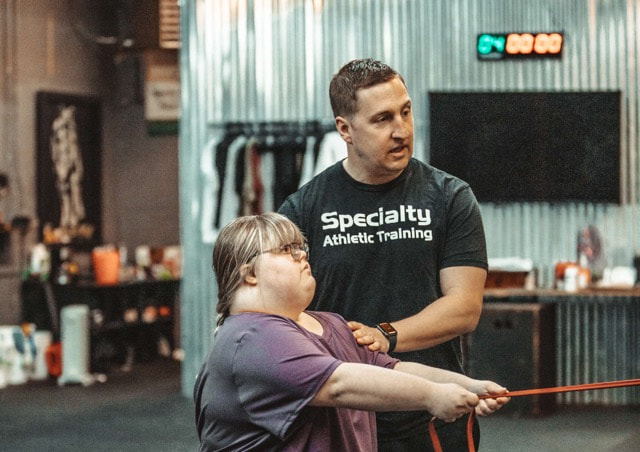 What process do you use to help beginning or nervous gym-goers feel confident working out? The first thing that we do is have a phone conversation to start the relationship-building process. We discuss not only goals and struggles, but your general interests as well. Our goal is to have each person feel comfortable with us before they even step foot in one of our locations. Getting a tour of the facility is the next step of our process. If you are a new gym-goer or nervous about starting, try and get a tour during a less busy time in the gym. During your initial phone call, ask when the busiest times are for the gym, and avoid those when scheduling your tour. Hiring a coach that you trust and enjoy working with is vital to your progress. They will be able to provide you with a structured program to reach your goals, as well as hold you accountable. It can be difficult to get started, and having a personal coach will help you stay consistent, especially during the tough times in your fitness journey. What benefits of exercise carry over outside of the gym that improve confidence? The best part of my job is hearing stories about how fitness has changed a client’s self-confidence outside of the gym. With a consistent fitness program, you will see results in the gym. Most importantly, you will see an increase in your quality of life. Being able to do things that you were unable to, or thought you were unable to do, before you began training will become the norm. My favorite story was hearing a mom's story about her son getting on and off the school bus independently for the first time after he began training with us. This is the perfect example of how gaining strength and confidence carries over to daily life. Her son began seeing improvements in other areas of his daily life as well. The confidence he gained while training was the start of a positive snowball effect in this individual and family’s life. 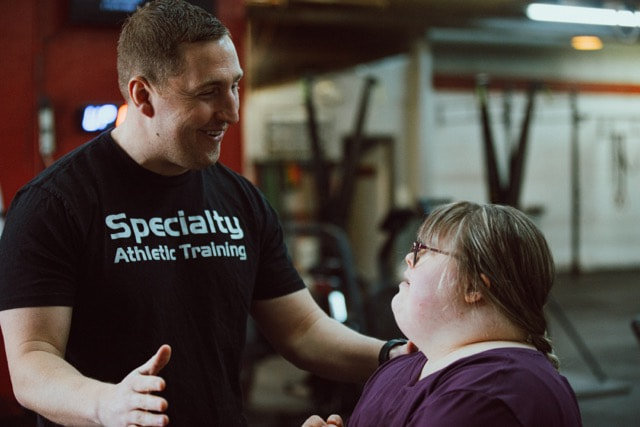 What about wardrobe? What do you wear to feel confident but not hinder your workout? I recommend wearing what you feel comfortable in, that also coincides with the rules of the gym that you’re going to. Many gyms will require closed-toe shoes for safety, not allow denim (it can be hard on the equipment), and require you to wear clothing at all times. The last one seems obvious, but it can be common for males to lift shirtless at certain gyms or studios (mainly CrossFit boxes). We understand that our clients may have sensory needs or other accommodations when it comes to clothing. Although we prefer them to wear closed-toe shoes, it is not required at our locations, and we make exercise selection modifications as necessary. You will find me working out in sweatpants, a t-shirt, a hoodie, and a pair of running shoes. Goal-setting tips? Any particular apps you like for record keeping or tracking progress? For all of our 1:1 clients, we use an app called Trainerize. It allows us to track progress and has a great positive reinforcement system built in. If you are looking to track nutrition, I highly suggest MyFitnessPal. It is free and allows for easy tracking and customization as needed to meet your goals. How do you recommend avoiding the comparison trap so people can still feel good while they’re striving for improved health? Our society deeply struggles with the comparison trap, so don’t feel alone! Everyone posts their “perfect” lives and bodies on social media, but tend to leave out their struggles. I’m a huge fan of the fitness influencers that show their bodies in not flattering poses and lighting, highlighting that they are not “perfect”. Consistency is key. Remember that everyone struggles with daily motivation, but it is important for you to show up. Your fitness journey is exactly that, YOUR fitness journey. Everyone starts somewhere and that first step can be the most difficult. You CAN do difficult things and getting in a fitness routine becomes one of the most positive addictions that you will experience. I also encourage people not to connect their success based on the number on the scale. That number can become stagnant but doesn’t mean that you’re not seeing positive results. Pay close attention to how your clothes are fitting, your daily mood, and your energy levels. Another motivating factor is that your health also directly impacts your loved ones’ lives. According to the CDC, over 40% of American adults are obese and individuals with disabilities are 57% more likely to be obese compared to their peers. The numbers posted are from the year 2020 (pre-pandemic) and it is safe to assume that the numbers have skyrocketed even more after our sedentary lifestyles during the lockdowns. Obesity puts you at a predisposed risk of stroke, type II diabetes, and heart disease; the three leading causes of preventable premature death. Any time that I am lacking the motivation to exercise, I think about my wife (Mary) and my two boys (Rory and Tatum). I want to do everything in my power to increase their quality of life. My staying active and healthy plays a huge role in that. 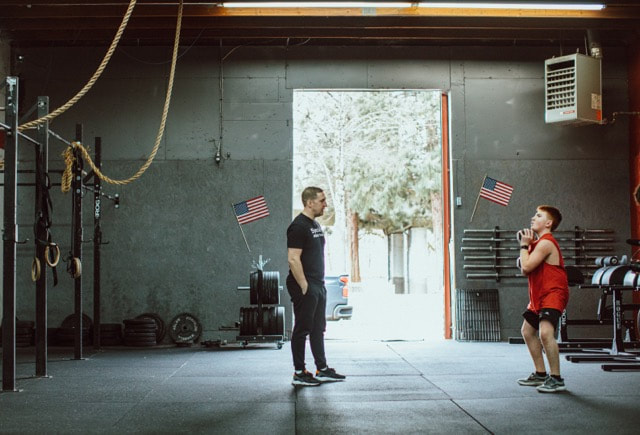 As seen on KATU News 4/14/2023 If you’ve been to a West Linn football game, you may have seen assistant coach Shawn Kelly on the sidelines.
What you might not know is that, when he’s not coaching football, he’s using his skills to create a welcoming space for people with special needs to improve their lives and health. Kelly works for Specialty Athletic Training, a fitness center that specializes in training people with disabilities. While Kelly does his work in both Portland and Vancouver, Specialty Athletic Training also has locations in Eugene and Bend. As one might expect, Kelly’s clientele come with their own unique challenges, starting with the pressure that can come with traditional gyms. “In the past, places like gyms can be intimidating or less inclusive,” Kelly said. “I think as we’ve come into this new age of people and understanding differences and where they come from, it’s been awesome to see.” However, Kelly told us that, in many ways, his clientele’s training journeys are just like anyone else’s. “I think everybody kind of has their own starting point, whether it's somebody that's within our clientele or not,” Kelly said. “Everybody's got their baseline, or their start, and the goal is we all want to be fit, whatever that means for us.” Kelly has been with Specialty Athletic Training for about a year. Watching him work with his clients, it is not hard to believe that he worked in mental health for 10 years before that. He is personable and makes a genuine effort to get to know each of his clients. “That’s probably the main piece of it, just that social piece,” Kelly said. “They feel welcome, they feel loved and cared for, and then the fitness stuff comes secondary.” In addition to making a difference in the lives of his clients, Kelly is also inspiring the next generation of athletic trainers. Emma Ehlers, an intern at Specialty Athletic Training, said he is a true source of inspiration as she enters the field. “He really showed me how to work with the clients and not take anything too seriously,” Ehlers said. “He keeps the vibes light around here, which I think is really important. And it makes the atmosphere a lot better.” 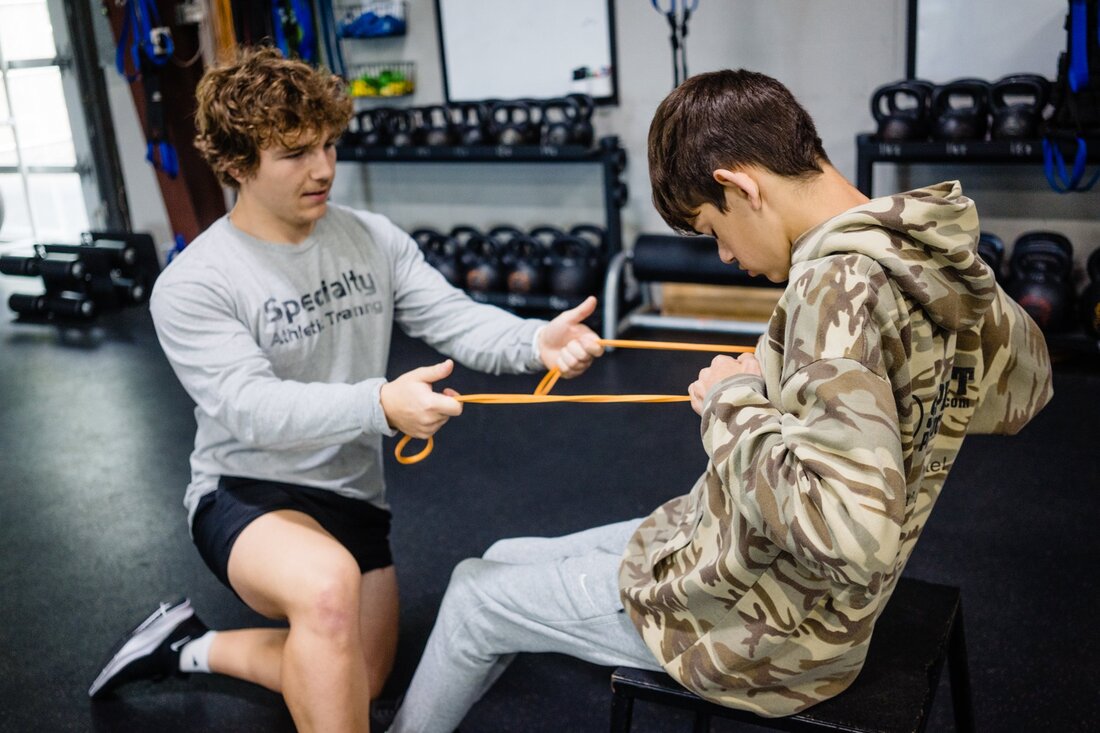 Featured by KTVZ Channel 21 news
BEND, Ore. (KTVZ) -- Luke Williams, a 19-year-old certified personal trainer, likes to push Abigail Hamer during their workouts at Boss Sports Performance. “You’re almost there girl -- I believe in you!” Williams told Abi during a workout. “Great job! You’re killing it, Abi!” Abi has Down syndrome, and she’s one of Williams' many clients he trains through Specialty Athletic Training. “There’s just a wide spectrum of disabilities,” Williams said of the clients he trains. “So I think that’s the biggest thing. It’s not just one niche little thing, it's a broad thing.” Here is Specialty Athletic Training’s description of the different disabilities it works with: "We have worked with over 750 individuals with a variety of diagnoses, including but not limited to: ADHD, Alzheimer's Disease, Autism, Cerebral Palsy, Diabetes, Down Syndrome, Fragile X Syndrome, Dyslexia, and Parkinson's Disease." Williams, a Mountain View grad, has a familiar connection to people with disabilities. “My older brother actually has special needs. He has cerebral palsy, with a little bit of brain damage,” Williams said. “I’ve always looked after him, and he’s always looked after me.” After volunteering for the Special Olympics, he knew helping people like his brother Logan was something he wanted to do more often. “I think the moment I stepped in that first class of helping everybody out,” Williams said. Now he trains kids like Abi every week, and they seem to like him. “He’s funny, and he keeps telling me jokes a lot,” Abi said. Joking aside, Abi’s here to get fit. “I like doing the bicep curls,” Abi stated. Noah Chast asked Abi who she thinks is stronger, her or Williams. She proudly responded, “me.” Helping kids like Abi get strong and confident is why Williams does it. “It means the world, honestly. I can’t even describe how amazing it feels,” Williams said. “I think I’ve honestly learned more from them than they’ve learned from me.” As seen in the Register Guard November 15th 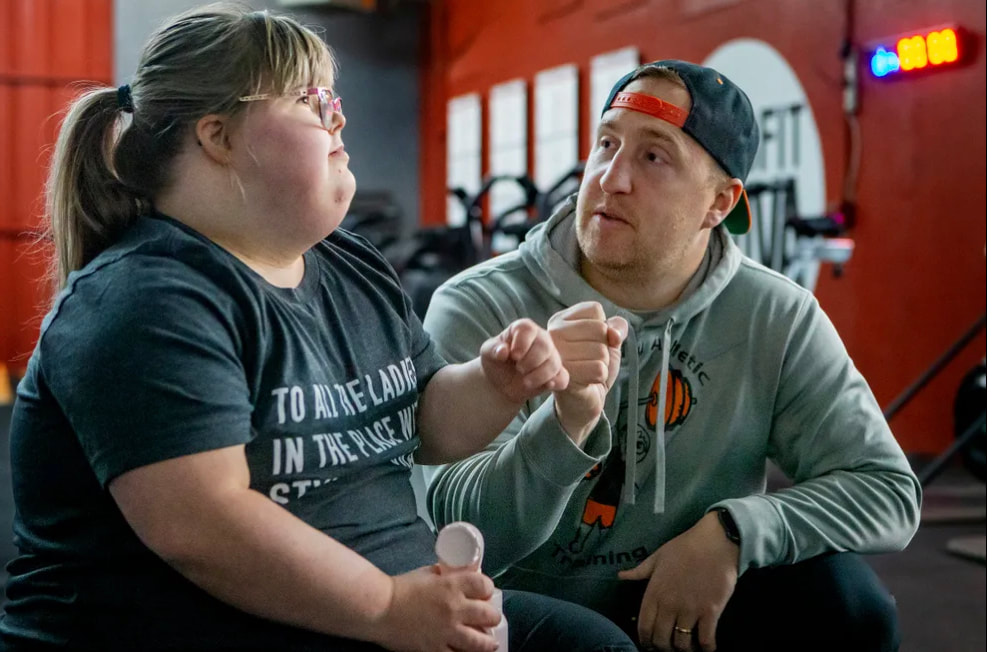 Photo by Ben Lonergan Rain was pelting down on the CrossFit Evviva building on a recent Sunday morning in Eugene, but it was a brighter scene inside the gym, where Savannah Hendrickson was working with her trainer, Ryan Lockard. For Hendrickson, who has down syndrome, it hasn’t always been easy finding opportunities to stay active. But by working out with Lockard, who specializes in helping people with disabilities, Hendrickson, 28, said it’s been the most fun she’s had training with someone. Lockard had Hendrickson do plank workouts for the first time, making sure she took breaks as needed and kept good form. “Walk forward a little bit more, good!” Lockard told Hendrickson, a Springfield resident, as some of her favorite Justin Bieber music played from the speakers. Hendrickson’s mom, Jeni Davidson, said Lockard has worked well with her daughter. “Ryan really understands what she's capable of doing both physically and mentally and he treats her just like any other client, but it’s on her level,” Davidson said. “I'm glad that they're in town.” Lockard, who lives in Portland, is the founder and CEO of Specialty Athletic Training, which offers training programs for people with autism, cerebral palsy and down syndrome. He started the company in 2012, but October was the first time Lockard began offering training sessions in Eugene. Lockard is originally from Creswell, and said he’s excited to reconnect with friends in the area and offer courses. So far he has a handful of clients he works with on Sundays at CrossFit Evviva, located at 247 Washington St. He said he hopes to eventually offer more days in Eugene. “This has always been something I've wanted to do,” he said. 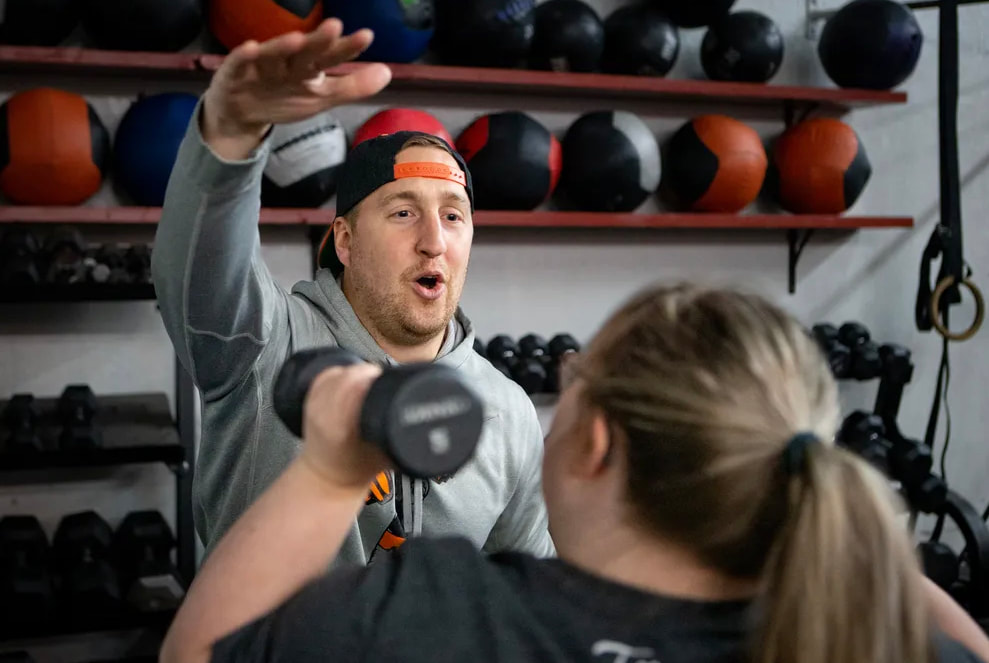 Photo by Ben Lonergan The company has three full-time and two part-time trainers. It also offers classes in Portland, Vancouver and Bend.
The idea of a career helping train people with disabilities came in Lockard’s final year at Lewis and Clark College, where he was a football player. After tearing his ACL and coming back for a fifth year, Lockard found a part-time job as a trainer for a 13-year-old boy with autism. By working with him, Lockard said he became passionate about working with people with disabilities who often have the same athletic abilities as others but aren’t treated the same. “I saw that the expectations for him were set lower than his peers in PE class,” Lockard said. “In some classroom situations, he was working on things that were different from his peers’ (work), and I got that on the educational side and the academic side. But physically, he was able to do everything.” Lockard spent several years going between Europe and the U.S. to play football and help train people back home. After coming home to be with his now-wife, Lockard formed his company in 2012, before it expanded across the state. Along with standard training certifications, Lockard became certified as a special population specialist. Aside from physical strength, Lockard’s training also helps people with their confidence and independence. “The cool thing is just hearing stories from the families, like, ‘My son or daughter was able to take the bus independently for the first time,’ or, ‘They're able to walk up the bus independently for the first time,’ or, ‘We were able to go on a hike, we went Mount Pisgah for the first time, and we're able to finish the hike,’” Lockard said. “Those are the stories that make it really worthwhile.” During his training with Hendrickson, Lockard uses frequent positive encouragement, and makes sure he prioritizes each client has fun. Lockard said being in a communal gym setting also helps break down prejudices. “We’re able to help stop the stereotypes and kind of be there to answer questions for people that have questions about what we're doing, or what was going on with one of our clients if they have a rough day for one reason or another,” he said. EUGENE, Ore. -- A new athletic training program for those with specials needs is coming to Eugene in just a couple of months. Specialty Athletic Training has been helping those with special needs get in shape, and according to founder Ryan Lockard it's all about building confidence in and out of the gym. "Number one focus is always making it fun for them, and making it where they want to do it on a daily basis and make it a part of their own lives," he said. They've served nearly 500 clients since they first started back in 2012. They serve anyone with special needs such as those with autism, diabetes, Parkinson's, ADHD, and more.
Spencer Kankel, the co-owner of CrossFit Eviva, said he and other co-owner, Laticia Ficek, were looking for more ways to include more people in their business. "We were really excited about the opportunity to host them because one of the things that Laticia and I agreed on when we purchased the gym was that we wanted fitness to be accessible to everybody. And so we really wanted to create an environment that was super inclusive, and that would serve as many people in the community as possible," Kankel said. And so, a new partnership was formed. Lockard has three other locations for Specialty Athletic Training in Bend, Portland and Vancouver, Washington. And in October 2022, CrossFit Eviva won't just be for people who want a hardcore workout, it'll also be a new home for Lockard's business. Alisa Sinnott and her son Patrick have known Lockard for years. Patrick being one of Lockard's first clients, after they first met at the Lewis and Clark College in Portland. "When Ryan started that program, Patrick wanted to be a part of it, because Ryan is his buddy," Sinnott said. "I firmly believe that he's not just doing this because of a job or as a company, or to have a business, but he's in it because his heart is in it, and this is where his passion has led him." Lockard, a native of Creswell, said it's all about coming closer together and building relationships with his clients. "The stories that really stick with you are the ones from outside of the gym, where clients can finally ride the bus by themselves or go on family walks with their dogs, and going on family hikes and things along those lines that they normally wouldn't do before," Lockard said. Written by Emily Hatch, CSCS Obesity is a well-known issue within our society that has become even more pronounced during the COVID-19 Pandemic. Our commutes to work are often through the kitchen, we have more access to food, and when boredom sets in, we often turn to snacking. Obesity, which “is a term that reflects excess adipose tissue,” affects around 30.4% of U.S. adults and 18% of children (Jacobs, 2018, p110). Even more, adults with disabilities have a disproportionately higher rate of obesity (36%) and 22% of children with disabilities are affected by obesity (CDC.com). According to the CDC, “adults with excess weight are at even greater risk during the COVID-19 pandemic.” Not only is obesity linked to an impaired immune system, but it “decreases lung capacity and reserve and can make ventilation more difficult” (CDC.com). Even more, 30.2% “of [the] hospitalizations were attributed to obesity,” which further shows the duty we, as trainers and societal members, must address this issue and slow the curve of COVID-19 (CDC.com). Simply put, obesity occurs when the “intake [of calories] exceeds expenditure over an extended period of time” (Jacobs, 2018, p.110). This excess intake may lead to “subclinical inflammation, vascular and metabolic dysfunction, and hormonal irregularities” (Jacobs, 2018, p. 110). Those who are obese may even experience a leptin resistance, which is “a protein produced in fat cells” that tells us we are full (Jacobs, 2018, p.111). So, what are some things we can do to encourage movement, create easier access to healthy foods and prevent further individuals from becoming compromised? For many adults and children, habit formation is critical to develop healthy eating patterns and exercise regimens. However, within the population we serve, those with developmental disabilities, combating poor food habits and exercise routines can be challenging and often requires a support system. In our experience, we have come across many clients who experience food sensitivities, are on medications that make weight loss challenging, may experience a lack of resources to healthy foods or may suffer from pain that discourages movement. We also have those who are thoroughly into video games, which increases both screen time and sitting time. We acknowledge these challenges but also have some great techniques for both clients and trainers to encourage movement and healthy lifestyle changes!
In my training experience, I have had the pleasure of working with many clients and families who are motivated to make lifestyle changes. And although not everyone has that support, we, as a training community, need to encourage individuals, as well as community members, to promote healthier food choices and lifestyle choices from an early age. The CDC also recommends community engagement within schools, hospitals, and childcare environments where we can teach healthy choices. Working on “neighborhood design, access to healthy, affordable foods and beverages, and access to safe and convenient places for physical activity” is also an essential step for our society to combat the negative effects of poor lifestyle choices, which can lead to obesity (CDC.com). However, as best we can, it is our duty as trainers to continue to fight for healthier lifestyles, create positive exercise environments and develop positive relationships for the prevention of a continued obesity pandemic. References
Jacobs, Patrick L. (2018). Nsca’s essentials of training special populations. Library of Congress Cataloging- in-Publication Data. Written by Emily Hatch, CSCS Down Syndrome is characterized by “a genetic disorder that results in a trisomy (three copies) of the 21st human chromosome” (Jacobs, L Patrick, 2018). Along with the trisomy of the 21st chromosome, those with Down Syndrome also experience hyper-mobility in multiple joints. This hyper-mobility allows for an adjustment in training modalities for these individuals. According to OrthoInfo, individuals with Down Syndrome may experience joint instability within their neck, knees, and hips while also dealing with various foot issues, including bunions and flat feet (2019). In order to improve these areas of the body, it is vital to strengthen the ligaments that are associated with these areas and “have optimal alignment of hips, knees and ankles to support” postural alignment (Gadson et al., 2018). The following exercises are imperative for an optimally designed workout tailored to an individual with Down Syndrome. In addition, these exercises can help to avoid immobilization or surgery.
As important as it is to focus on these target areas, we at Specialty Athletic Training have a main goal of ensuring our workouts are met with motivational fun. And this enjoyment is emphasized through the use music, which is “a universal medium for exercise activities” for those with Down Syndrome (Jacobs, 2018). In my own experience, our clients with Down Syndrome MUST have the perfect playlist to get ‘pumped up.’ I have listened to a plethora of hip hop and pop music, the most popular being the 2000s throwback hip hop playlist. And I find that the perfect playlist will get our clients moving. I have even learned some new dance moves (that prove much too difficult for myself), have witnessed the positive association between workouts and music, and have even seen the communal bond established between our clients and the student-athletes at Lewis and Clark College, simply through music. With this being said, the importance of developing a program tailored to joint strengthening in vulnerable areas should always be met with an understanding of the client. Whether it be through weight training, music, dance, or other modalities, being an effective trainer means understanding our clients as a whole human being. So, when you are getting ready to train your next client, turn on those tunes, establish a communal environment and make that workout fun! 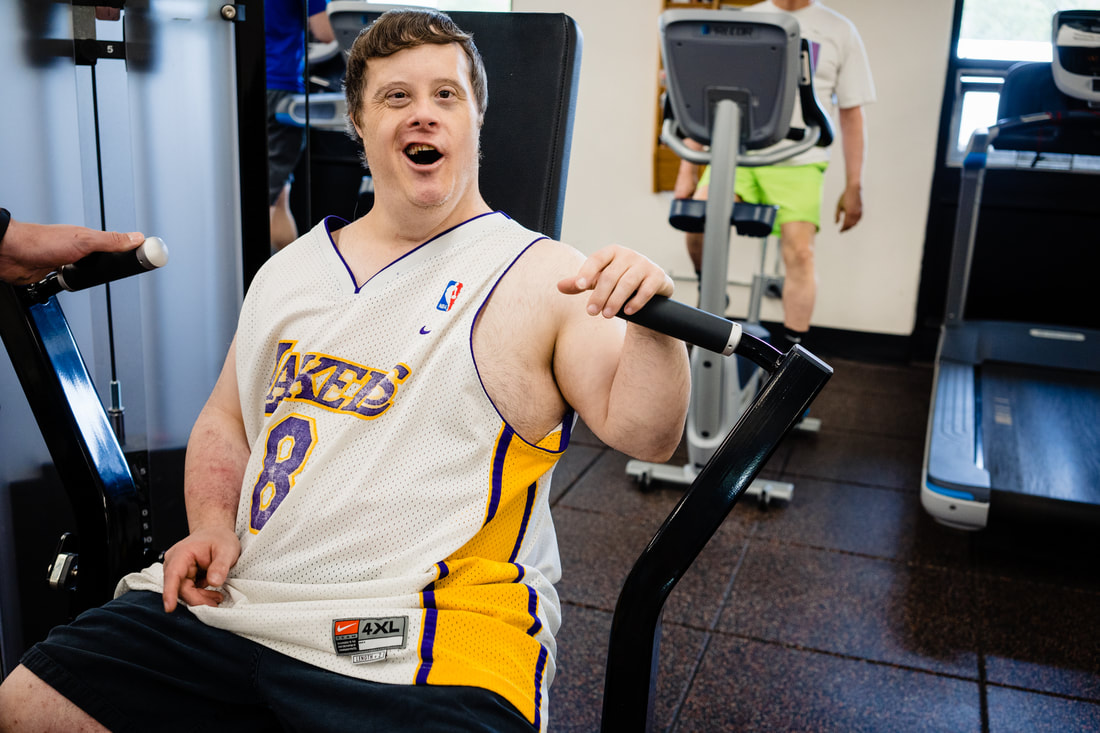 References
Gadson, Andrea PT, MPT; Shimanek,P PT, DPT, (2018, Aug). Physical therapy for adolescents thru adulthood with down syndrome. https://www.nads.org/wpcontent/uploads/2018/08/Shimanek-NADS-2018-PT-for-adolescents-thru-adults-with-DS.pd Jacobs, Patrick L. (2018). Nsca’s essentials of training special populations. Library of Congress Cataloging- in-Publication Data. (2019, Jan). Down syndrome: musculoskeletal effects. OrthoInfo. orthoinfo.aaos.org As featured in Spectrum Life Magazine Winter 2021 Issue
Providing access to fitness and healthy living to the special needs community has been our mission since being founded in 2012. We started by providing individualized 1:1 personal training instruction and then added small group fitness classes. The pandemic made it difficult for many of our clients to not only access our services, but many of their other daily activities. Being isolated in quarantine with limited social outlets, we noticed that their mental health was being dramatically affected. We reached out to our dear friend Galen Torrey Fairbanks to create a unique and inclusive virtual yoga series. In August of 2020, we offered our first virtual yoga series for our clients and their families and have been offering 5-10 week series ever since! The classes are for all ages and ability levels, and we encourage for all family members to participate. How does yoga benefit people with disabilities? (written by Galen Fairbanks) Yoga can be helpful for all people, including and perhaps especially those with disabilities, in feeling better in their bodies, calmer in their minds, and more connected to their communities. Through my training, research, and experience teaching yoga to individuals with special needs with Specialty Athletic Training, I’ve found that students respond well to the social aspect of class, playful and inclusive breath work and movement, and self-soothing practices. After class, most students express feeling calm and in less physical pain than they were before class. The consistency and predictability of meeting each week at the same time, with the same group, and repeating the same postures allows students to feel connected and safe with each other and in their own bodies. When the nervous system feels safe, the body feels relaxed, we’re able to socially engage, look and listen, mirror emotions with others, and our heart rate and digestion are optimal. This is a state that as humans, we want to be in more often than not and allows us to be in relationship with others. It may be especially helpful for individuals with special needs or who feel nervous, over or under active, or have difficulty with communication, regulating emotions, or sleeping. This familiarity allows us to learn and practice additional Yoga skills that help us stay in this relaxed state, and by keeping these playful and inclusive, everyone feels successful. The Pranayama or breath practices we do often include vocalizations like creating the sound of a boat horn, owl, or bumble bee on the exhale breath. This fun and creative exercise allows each student to create their own unique sound while supporting the nervous system in feeling calm and creating community with each other. We incorporate playful movement through poses like Vrksasana or Tree where I ask students to embody their favorite tree and then give them options to reach their arms out like branches, or stay still, or move in the wind. Since everyone’s version of the pose is celebrated, everyone feels included and successful. Balancing poses like Tree also have functional benefits like helping with balance, proprioception or knowing where your body is in space, and coordination as the pose is asymmetrical. Moments of more mellow movement and energy can assist in establishing healthy self-soothing techniques. We often give ourselves a hug and then massage our arms, feel the support of the chair or floor beneath us, audibly exhale our breath, or do restorative Yoga poses like Stonehenge. These types of practices help ease the body in and out of movement, support feeling safe in low-key environments, and help create healthy relationships with our bodies and self. What are some techniques that our readers can practice at home? (Pictures would be helpful.)
2. Vrksasana or Tree Pose From seated or standing, begin to walk, march, or jog in place. As you feel ready, keep one foot lifted off the ground and use the support of a wall or chair as needed to balance. Turn the lifted knee out towards the side of your space and place your toes on the floor or sole of your foot on the inseam of your opposite leg. From here, you might lift one or both arms out or up; you might flow in the wind or stand tall and strong. After a few moments, shake out your legs and try it on the other side! 3. Stonehenge Pose Begin laying down on your back with your feet near a chair or couch. As you’re ready, lift your lower legs and rest them on the seat of the chair or couch cushions. Rest your hands on your torso and focus on the texture of your clothing or the rise and fall of your body and you breathe in and out. You might place an eye pillow over your closed eyes or a blanket over your body. Relax here for as long as feels comfortable. As featured in Spectrum Life Magazine Winter 2020 Issue
Imagine that you walk into a room and are instantly paralyzed by the bright lights. While standing there motionless, erratic and unpredictable sounds are so loud that you can’t hear anyone speak, even though you see lips on the blurred faces moving everywhere as you observe the room. There is a weird aroma in the air, part Axe body spray, and part body odor. The aerosol from the body spray and other cleaning agents in the air quickly overwhelm you and make you feel that someone has a death grip around your throat. Welcome to the weight room. Aside from feeling intimidated by all of the machines and not knowing what to do or where to start, the experience described above can also make visiting a fitness facility a nightmare for many. This is especially true for Specialty Athletic Training clients who experience sensory processing issues or who have been diagnosed with Sensory Processing Disorder (SPD). Even with these challenges, exercise still needs to be a part of daily life for these individuals in order to decrease other comorbidities that may arise and live a prolonged and healthy life. Virtual training can be (and has been for many) a great alternative to visiting the gym. People seek personal trainers for several reasons, but they usually are seeking guidance and accountability. Connecting with a trainer who provides a virtual training option can provide both benefits without the negative in-person gym experience. At Specialty Athletic Training, our virtual training option has been our lifeline throughout the pandemic. With all of the regulations that have been placed on gyms over the past year, offering online training to the people we serve has allowed us to still be able to work with our clients in 1:1 and group settings. It has enabled us to keep our sense of community and our clients active. Both have played a crucial role in maintaining their mental health during such an anxiety-ridden time in our history. It has also allowed others to have access to our services that they may not have received prior to COVID. Proximity to the locations we offer training has been a barrier to access in the past; however, virtual training has made it possible for us to work with clients worldwide and provide our services to our clients while they are on vacation. Although virtual training can be a great alternative for many, some need and crave our in-person instruction. The word “struggle” doesn’t even begin to describe the experience that some of our clients have had with “distance learning” over the past year, let alone trying to receive workout instruction via a computer screen. We take pride in building relationships with our clients, which in turn leads to earning their trust. This can be difficult without the in-person experience. Our approach is to make fitness fun and encourage self-esteem building and healthy lifestyle choices. We are passionate about the positive effects that exercise can have in the lives of our clients and their families! We have worked with over 450 individuals with a wide range of disabilities and health care needs, including but not limited to Autism, ADHD, Cerebral Palsy, Diabetes, Down syndrome, Alzheimer’s disease, Parkinson’s disease, and Williams syndrome. Virtual training can provide the guidance and accountability that one may need to stay on track to reach their health goals without stepping foot in the typical gym setting. It has allowed us to remain a part of our clients’ lives, even though we haven’t been able to see many in-person since March 15, 2020. We look forward to the day where individuals will have the option of accessing our services physically at one of our Oregon or Southwest Washington locations or virtually worldwide, whichever best suits their needs. |
About the AuthorRyan Lockard, CSCS*D, CSPS*D is the Founder and CEO of Specialty Athletic Training. He is accredited by the National Strength and Conditioning Association (NSCA) as a Certified Strength and Conditioning Specialist and a Certified Special Populations Specialist. Lockard is a member of the board of directors for the Autism Society of America and the advisory board for the NSCA Oregon chapter.
Archives
November 2023
|
 RSS Feed